Tag Archive | "ePub"

Apple’s Selfish And Contradictory Stances On Patents And Licensing

Apple vs Patent LicensingBarely a week goes by when Apple is not involved in a patent dispute with some technology firm or other – but its reasoning for the various lawsuits (whether the claimant or defendant) is often self-contradictory. On the one hand there is the Apple that actively tries to block the emergence of open standards that would results in its patents being available on FRAND terms, and on the other there is Apple complaining that other technology firms don’t license patents to them in that very same fair market.

When Apple owns relevant patents they do all they can to avoid standards being set up where they would have to freely license them in order for an open standard to be produced. A case in point is the development of the Touch Events” specification being developed by the W3C working group – a specification that is designed to be royalty-free so that all companies have a level playing field when developing products around it. Apple waited until the last possible moment to suddenly “find” that it had some relevant patents that it was not prepared to license in this way, and thus has added huge delays to the specification being finalised as the W3C now has to find alternatives working around Apple claims. If Apple had joined the working group then it would have been forced to disclose these patents earlier and therefore not cause such a delay, but they refused to join – allowing themselves the option of scuppering any such specifications as they appear.

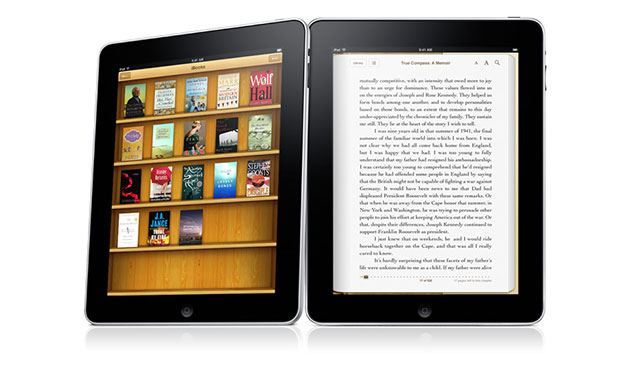
As we have previously covered here on TechFruit, Apple also takes open standards such as EPUB3 to help develop its marketshare in a new realm, in this case eBooks, and then once it has established some dominance, such as in the tablet space with the iPad, it adds a proprietary wrapper layer to squeeze out the competition. Apple’s iBooks 2.0 format is just such an example of Apple actively working to break open standards that are available.

Now business is cut-throat, and Apple is free to license its patents and add proprietary layers as it sees fit – but in their legal fight with Samsung, Apple is now complaining that the open standards and fair licensing terms should be applied to them. In court documents recently unearthed by patent expert Florian Mueller, it appears that Motorola Mobility is asking for 2.25% of Apple’s sales to license the wireless patents that temporarily got Apple forced to remove various iPhone and iPad models from their German online store. This is a hefty fee, and the patent should be available for licensing under “fair, reasonable, and non-discriminatory” (FRAND) terms – but Apple is claiming discrimination. Indeed, Apple have filed motions in various US courts to obtain the licensing terms that Motorola Mobility has for these patents with other technology firms such as Nokia, HTC, LG, and Ericsson in order to show this discriminatory action.

However, with these other technology firms all also offering patents as part of the wireless standards – part of Motorola Mobility’s license agreements with them would likely include similar rate-terms for licensing their respective patents – meaning they are all on a level play field. Apple may feel discriminated against, but if they do not offer any of their patents to be involved in these standards and actively work to dismantle them – then they don’t have any such essential patents with which to bargain. They are currently trying to have their cake and eat it in the patent forum – but they will soon have to decide which way they want to work and I’m hoping they embrace open standards.

Posted in Gadgets, Law, Media, NewsComments (0)

Apple Doesn’t Play Well With Others (eBook Edition)

iBooks

Apple has been playing footsie with Exonn Mobile for the title of the biggest company in the world for a while now, and their most recent financials go to show the even after the death of founder and visionary Steve Jobs – the truck keeps on rollin’. They produce the most popular smartphone, they dominate the tablet market, they are increasingly dominating the PC market, and they are one of the strongest voices in online content from music to movies – not a small “indie” operation then. Why do I ring all this up? Because Apple is using that considerable wealth and influence to destroy open competitors.

Apple has a history of trying to lock out competitors from their devices. First there was the Apple “FairPlay” DRM that was wrapped around music bought from iTunes that no competitor could offer – eventually making all other DRM on music files obsolete. It was only when the labels finally acquiesced on the topic of DRM-free MP3s could other digital music stores start to compete with Apple to sell music for iPods. Now there is Apple using the old “embrace, extend, and extinguish” method to squeeze out competitors in the eBook market.

For the last two years Apple has embraced the open ePub format for books – it was the only format they supported at the launch of iBooks 1.0. But now they have extended that open standard with unsupported CSS extensions and a closed proprietary Apple XML namespace – preventing others from supporting the format. iBooks author may now make something that looks an awful lot like EPUB3, but it most certainly isn’t because Apple doesn’t to compete in a marketplace.

Now you could be thinking – what’s the harm? The harm is that Apple has been promoting the use of iBooks Author and iPads to schools to “improve” education with digital textbooks. They are trying to woo schools and education establishments into locked in devices and services where they can only use Apple products in the future or risk losing their digital library – because no other e-reader or tablet can open the books. Apple won’t even let authors import ePub works in iBooks Author to convert them into Apple’s new proprietary filetype – they are trying to get authors and therefore users locked into the Apple monopoly where Apple can pick the price, pick what is censored, and pick how people read.

If you’re an author it would be a mistake to ignore Apple’s format as they have a huge marketshare, but why not let authors convert between the formats? Why force an author into a situation where they are beholden to Apple for selling all copies of their book?

Real, dead-wood books can be read by anyone, but Apple wants e-reading to be limited to those who bought their products. It’s about time the anti-trust and competition investigators looked into this.

Posted in Computing, Gadgets, Media, NewsComments (2)